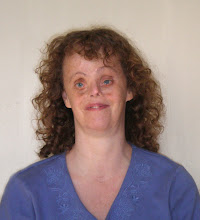
I have some very personal experience with Post Traumatic Stress Disorder (PTSD) that, even after successful treatment, sometimes impacts my life. Typically, PTSD develops after an individual survives a traumatizing experience and only afterward has a reaction to that event. Those who are raped and combat soldiers are most often thought of as people at risk for PTSD, but it is also widely recognized as a possible consequence of emotional, physical, or sexual abuse, neglect, violent crime, natural disaster, and the events of 9-11. Symptoms of the condition vary widely, but are generally depression, inappropriate fear response to specific situations, flashbacks, body memories, and nightmares. That was my experience of PTSD, at any rate.
MY PTSD was not a result of any of the circumstances I listed above. Instead, mine evolved about five years after I stopped having reconstructive surgery, and was a direct result of how I handled (or in this case didn't handle) what happened to me. (The entry "What My Classmates Never Knew" describes my medical history.) The PTSD exploded onto the scene when an interviewer asked me a simple question, "How did all that hospitalization effect who you are now?" My stomach fell into my shoes and a floodgate opened with memories pouring forth day and night.
Any little thing – word or even a specific texture of plastic – could trigger a swamping of my mind with events of the past. Body memories are a kind of flashback with which I became very familiar. It goes beyond remembering to actually experiencing the physical sensations associated with the memory. Some completely lose touch with their current reality and the remembrance is all they know, but I didn't have that experience. Instead, I recall making my hands into fists and focusing very hard on just breathing because somebody happened to mention needles. I avoided one specific plastic food storage container because of the shape of the rim evoking memories of oxygen masks held over my face. There was one January day where my roommate held me for a very long time because I couldn't stop the memories from coming one after another.
With therapy, I learned to control the memories and work through what I had experienced as a child. Ironically, an emergency appendectomy aided in my healing in ways I still do not fully understand. I guess it has something to do with going through a medical situation that was 100% necessary for survival and coming out the other side without experiencing the kind of trauma I did as a child. Whatever the case, one year after it all came pouring out I was getting better.
To be clear, better does not mean gone. I do not know anybody who has dealt with PTSD who does not from time to time have a disproportionate fear response to something or the occasional nightmare. Current life events can sometimes drag up old issues and things get "interesting" for a time. At the moment, that is the case for me. One of my eyes is misbehaving and, though it has no useful vision, it still lives in my head and can develop problems. Of course – and this happens to me a great deal of the time – the doctor has no idea what might be actually causing the symptoms, so I have been making rounds of experts, including a totally weird but incredibly brilliant ear, nose and throat specialist, to determine if my facial structure anomalies explain current symptoms. Fortunately his quirks were an intriguing distraction whereas the ophthalmic plastic surgeon was fear-invoking. At the best of times, this species of doctor makes me want to scream and this one found it necessary to start discussing how a "cap" on the eye not giving me trouble could be beneficial.
Now surgery looms on the horizon, filling me with instinctive fear. Some days I think my emotions are irrational and perhaps I should be declared the literal kind of insane. Other moments find me proud because I have managed to not have a single nightmare. Part of the problem is that I have no idea how freaked out a "normal" person would be about current circumstances. Am I just the usual amount of scared or something beyond that?
I know my childhood medical experiences and the resulting PTSD will be a part of me throughout my life. My appendectomy helped me realize I can manage a difficult situation without it resulting in trauma. Perhaps this surgery will be the time and place where I realize that the part missing from me being "better" is me declaring it to be so.
Showing posts with label how I feel. Show all posts
Showing posts with label how I feel. Show all posts
Wednesday, January 27, 2010


Wednesday, January 20, 2010
Doing it with Grace?
I've always wanted the word "graceful" to describe how I live through the Hard Things life throws my way. At its core, this desire is based not on how I perceive my own actions, but the subjective interpretations of others. In many ways this contradicts the stance I have taken that I care little for what others think. Guess what? I'm contradictory.
This desire to be seen as graceful during stressful events stems from more than one source. First, I do not want to disappoint anybody. The praise I receive for my strength feels like a burden that I must shoulder while fighting my way through troubled waters. It doesn't help that I am one of the above-mentioned "anybodies" who I am afraid of disappointing. When life gets hard, I feel like a newly blinded person walking an obstacle course, increasing my feelings of inadequacy--for who wants to feel as though they cannot manage to cope with their life without crashing into everything in proximity?
Oddly enough, I cannot actually articulate what it would look like to live through a Hard Thing with grace. Does that mean I don't complain? Am I supposed to avoid self-pity and always seem totally alright? Maybe I get to fall apart but only a little bit on alternate days. Perhaps I can cry but only if it doesn't make my eyes red? I want to behave in a manner I cannot even describe, which highlights the ludicrousness of the entire thing.
Turning to the dictionary for help proved to be rather useless. Abstract definitions of graceful, such as "characterized by elegance or beauty" offer nothing concrete. By whose yardstick do we measure elegant, and isn't beauty in the eye of the beholder?
Next, I tried talking to my yoga buddy to see if I could verbally express the state I wished to reach, coming up with things like "never fall apart," "never complain," "don't need anything," and "always be positive." As the words passed my lips, I heard their failings. Not showing others how I feel is a type of dishonesty I endeavor not to commit. Furthermore, I lack the ability to be entirely self-sufficient and my sense of humor, with its sarcastic tendencies, is not suited to perpetual sanguinity. If those phrases describe grace, I am not capable of exhibiting it.
TV and film offer a plethora of examples of people living through Hard Things with grace almost as if they pass through the experience protected by the emotional equivalent of Teflon. Whenever I watch such things, I feel judgment pouring out of the television directly at me, a dented frying pan with a surface so scratched that half the scrambled eggs stick to the bottom. There has to be some middle ground between damaged to the point of uselessness and so pristine that nothing has penetrated.
A friend observed that those who stoically live through tribulations are often praised because they make witnesses feel better. Not only are the observers spared from watching someone in pain, but they are comforted by the idea that should they have a similar trial in their lives it will be equally routine.
In the above I may have finally found some useful truth. Relentless optimism in the face of a difficult situation ignores part of the experience life is offering. Life's Hard Things are meant to make us feel a myriad of emotions, and relentlessly wallowing in the negative is considered unhealthy. Perhaps it is equally destructive to remain determinedly positive, for there is no joy without sorrow and no sorrow without joy. Maybe, just maybe, allowing yourself to feel whatever happens to grow within your heart is true health. It's possible that truly living means you must fully experience every emotion. Could true grace be following a course through turbulent waters that zigs and zags while you maintain the certainty that you will reach your destination on the other side?
Now I don't have a word to describe the quality I wish to possess while I wend my way to the other side of a Hard Thing, but I finally know its nature and that I possess the ability to engender it in my life. I want to embrace all the emotions that pass through me and express them without the clutter of self-judgment. Though mine might be sarcastic and ironic at times, I know humor must be a part of it. And through it all I will possess the bone-deep belief that I will get to the other side having lived all of it – the good, the bad and the comical.
All this is simply words on a screen that mean little unless I can actually do it in the face of a Hard Thing. Well, I am in the middle of such an experience, and in fact wrote this entry to try and sort out my feelings. One of my eyes has decided to use pain as its means of expressing a desire to no longer be of this earth. Removal in some form is on the horizon, and my attitude has not been what I would like. I now have a clarity about how I wish to live this next little part of my life. May clarity go further than the end of my nose.
This desire to be seen as graceful during stressful events stems from more than one source. First, I do not want to disappoint anybody. The praise I receive for my strength feels like a burden that I must shoulder while fighting my way through troubled waters. It doesn't help that I am one of the above-mentioned "anybodies" who I am afraid of disappointing. When life gets hard, I feel like a newly blinded person walking an obstacle course, increasing my feelings of inadequacy--for who wants to feel as though they cannot manage to cope with their life without crashing into everything in proximity?
Oddly enough, I cannot actually articulate what it would look like to live through a Hard Thing with grace. Does that mean I don't complain? Am I supposed to avoid self-pity and always seem totally alright? Maybe I get to fall apart but only a little bit on alternate days. Perhaps I can cry but only if it doesn't make my eyes red? I want to behave in a manner I cannot even describe, which highlights the ludicrousness of the entire thing.
Turning to the dictionary for help proved to be rather useless. Abstract definitions of graceful, such as "characterized by elegance or beauty" offer nothing concrete. By whose yardstick do we measure elegant, and isn't beauty in the eye of the beholder?
Next, I tried talking to my yoga buddy to see if I could verbally express the state I wished to reach, coming up with things like "never fall apart," "never complain," "don't need anything," and "always be positive." As the words passed my lips, I heard their failings. Not showing others how I feel is a type of dishonesty I endeavor not to commit. Furthermore, I lack the ability to be entirely self-sufficient and my sense of humor, with its sarcastic tendencies, is not suited to perpetual sanguinity. If those phrases describe grace, I am not capable of exhibiting it.
TV and film offer a plethora of examples of people living through Hard Things with grace almost as if they pass through the experience protected by the emotional equivalent of Teflon. Whenever I watch such things, I feel judgment pouring out of the television directly at me, a dented frying pan with a surface so scratched that half the scrambled eggs stick to the bottom. There has to be some middle ground between damaged to the point of uselessness and so pristine that nothing has penetrated.
A friend observed that those who stoically live through tribulations are often praised because they make witnesses feel better. Not only are the observers spared from watching someone in pain, but they are comforted by the idea that should they have a similar trial in their lives it will be equally routine.
In the above I may have finally found some useful truth. Relentless optimism in the face of a difficult situation ignores part of the experience life is offering. Life's Hard Things are meant to make us feel a myriad of emotions, and relentlessly wallowing in the negative is considered unhealthy. Perhaps it is equally destructive to remain determinedly positive, for there is no joy without sorrow and no sorrow without joy. Maybe, just maybe, allowing yourself to feel whatever happens to grow within your heart is true health. It's possible that truly living means you must fully experience every emotion. Could true grace be following a course through turbulent waters that zigs and zags while you maintain the certainty that you will reach your destination on the other side?
Now I don't have a word to describe the quality I wish to possess while I wend my way to the other side of a Hard Thing, but I finally know its nature and that I possess the ability to engender it in my life. I want to embrace all the emotions that pass through me and express them without the clutter of self-judgment. Though mine might be sarcastic and ironic at times, I know humor must be a part of it. And through it all I will possess the bone-deep belief that I will get to the other side having lived all of it – the good, the bad and the comical.
All this is simply words on a screen that mean little unless I can actually do it in the face of a Hard Thing. Well, I am in the middle of such an experience, and in fact wrote this entry to try and sort out my feelings. One of my eyes has decided to use pain as its means of expressing a desire to no longer be of this earth. Removal in some form is on the horizon, and my attitude has not been what I would like. I now have a clarity about how I wish to live this next little part of my life. May clarity go further than the end of my nose.
Wednesday, January 6, 2010
When is Amazing Insulting?
Sometimes people tell me I'm amazing. Such a compliment should flood me with pride, right? Nope, not me. My internal reaction is more akin to somebody who has been insulted. Few understand this response, and my explanations do not elucidate. Perhaps what cannot come out of my mouth persuasively will pour from my fingers convincingly.
First, let's get one thing very clear: I am amazing – smart, funny, creative, a great friend, and sometimes wise. The real problem is the single word that sooner or later is attached to most accolades. "Wow, Jen, I don't know how you do that. If I were blind..." or "Jen, I'm so amazed at how you"x" because you're blind." Now replace the word blind with woman. "Sally, it's so amazing that you can build a bookcase because you're a woman." Feminists everywhere would protest. In the case of any disability, however, it's somehow not only acceptable but flattering to say this.
In our minds, we all have a collection of others' actions we consider typical/average/ordinary/normal in any given set of circumstances. The behaviors usually are not fixed but represent a range of possible acts. For example, typical responses to coming upon a burning building could be anything from calling 911 to turning a hose on the flames, or even smashing in a window to enable a trapped person to escape. Both walking by doing nothing or running into the structure are outside this range. We judge one of these acts to be worthy of praise, and the other deserving of condemnation. Assumptions abound in this highly subjective process that is fundamentally about internalized social norms, cultural expectations, and stereotypes. These behavioral norms and evaluative processes function as social lubricant and have a definite place amongst humanity, but sometimes they can go a wee bit awry.
In order for somebody to find my actions admirable, they must determine that these acts fall outside the range of ordinary behavior in a positive manner. Rather than evaluating me based on what is typical for any person, they use the category of expectations they have for blind people, which are often substantially lower. I do not find it flattering to be told I have surpassed low expectations. Furthermore I find it insulting to expect less of a blind person simply because they are blind.
Most people tell me that "If I were blind, I'd have trouble doing 'x'." Their expectations of blind people are engendered by what they think it would be like and how that would impact what they could do. To me, there is a difference between my perceptual abilities and what I can accomplish. In baking a cake, I cannot see if the measuring cup is full. Is my cake somehow better because I felt instead of saw my way through the task? TABs reason from what a disabled person cannot do directly to how that impacts achievements without taking into consideration adaptive techniques and assistive technology. Skipping the middle part makes miraculous what is in actuality, commonplace.
Not convinced yet? Well, I have another reason to loathe such praise. Those we label as amazing are separated from "average folks" by their accomplishments. Being up on a pedestal to be admired creates more barriers between me and my goal of being seen as different without being alien. Nothing would make me happier than to just be Jen, not that amazing blind person who can live all by herself. It strips my individuality while further distancing me from those with whom I should be socially integrated. In fact, it is my experience that friendship is only possible after people stop continually seeing me as an amazing blind person and admire me simply as a person.
First, let's get one thing very clear: I am amazing – smart, funny, creative, a great friend, and sometimes wise. The real problem is the single word that sooner or later is attached to most accolades. "Wow, Jen, I don't know how you do that. If I were blind..." or "Jen, I'm so amazed at how you
In our minds, we all have a collection of others' actions we consider typical/average/ordinary/normal in any given set of circumstances. The behaviors usually are not fixed but represent a range of possible acts. For example, typical responses to coming upon a burning building could be anything from calling 911 to turning a hose on the flames, or even smashing in a window to enable a trapped person to escape. Both walking by doing nothing or running into the structure are outside this range. We judge one of these acts to be worthy of praise, and the other deserving of condemnation. Assumptions abound in this highly subjective process that is fundamentally about internalized social norms, cultural expectations, and stereotypes. These behavioral norms and evaluative processes function as social lubricant and have a definite place amongst humanity, but sometimes they can go a wee bit awry.
In order for somebody to find my actions admirable, they must determine that these acts fall outside the range of ordinary behavior in a positive manner. Rather than evaluating me based on what is typical for any person, they use the category of expectations they have for blind people, which are often substantially lower. I do not find it flattering to be told I have surpassed low expectations. Furthermore I find it insulting to expect less of a blind person simply because they are blind.
Most people tell me that "If I were blind, I'd have trouble doing 'x'
Not convinced yet? Well, I have another reason to loathe such praise. Those we label as amazing are separated from "average folks" by their accomplishments. Being up on a pedestal to be admired creates more barriers between me and my goal of being seen as different without being alien. Nothing would make me happier than to just be Jen, not that amazing blind person who can live all by herself. It strips my individuality while further distancing me from those with whom I should be socially integrated. In fact, it is my experience that friendship is only possible after people stop continually seeing me as an amazing blind person and admire me simply as a person.
Wednesday, December 23, 2009
Navigating Life
Chronic illness and blindness often have diametrically opposed needs. The former necessitates coping strategies that minimize energy output while maximizing results whereas the latter requires methodical techniques with repetition or intense focus as crucial components. When contemplating a task, I must frequently navigate between conflicting needs of health versus accomplishing the endeavor. Oddly enough, literal navigation – getting from point a to point b – is the area in which I encounter this minefield most.
When you navigate with a cane, there are a multitude of things you attend to simultaneously: 1. your mental map of the route, 2. landmarks like street crossings relevant to your route, 3. stationary obstacles such as trees and poles, 4. moving obstacles like people and cars, and 5. sound cues that aid in walking a straight line. If you are me, add to that list an intense attention to obstructions at face level. Experience melds much of the above list into a sort of instinctive overall awareness of environment, but techniques can differ or conflict. For example, stationary obstacles are discovered by cane and sometimes sound while moving obstacles are only detected by ears. Awareness of face-level obstacles can take your attention away from those on lower levels. It's complicated mental juggling that takes a great deal of energy in addition to the effort of actually walking.
Given that my chronic illness limits energy, I have a keen awareness of how much effort an activity requires and a tendency for frugal spending of the precious resource. Rides from friends are a staple in moving from one point to another. While I am eternally grateful to the people involved, I am continually frustrated by what I see as my dependency on others.
As my energy has grown, I have tried to increase my independent travel, like taking the bus. I admit freely that I am a wimp about it because I'm afraid. Afraid of getting lost. Afraid of strangers. Afraid of needing help. Afraid of looking like a fool. Afraid of, well, everything. I know these fears are ridiculous, but I can't help it.
There is one thing I left off the above list – fear of getting too tired. I recently discovered that is not unfounded. Instinctively I believed that getting to a place might take so much energy that I would not be able to do the activity let alone deal with the return journey, so I avoided situations where I thought that was probable. Recently I had a doctor's appointment and no ride. Since the office is 3 blocks from the bus route that runs past my house, I thought I should attempt getting there under my own steam.
To make certain I could handle the route, I walked it with my friend trailing behind. In fact, she had to trail far enough behind me that her sound would not give me any clues that might aid in following a straight line. Initially she reports having to bite her tongue so she wouldn't blurt out information, but the urge slowly lessened. After we arrived at my destination, we retraced our steps my friend still shadowing me. A few minutes into the journey, we stopped and she said, "You are having trouble walking in a straight line."
I replied, "Yeah, I'm tired.
Suddenly, I realized my instincts were totally right – I could get so exhausted that I might not be able to navigate successfully and avoid peril.
Guess it's nice to know my assumptions weren't keeping me from doing something otherwise possible, but damn. Before I had the possibility of doing things by myself and not doing it was somehow a choice. Now it is a fact and that somehow feels far more limiting and frustrating.
The up side of all this is that guide dogs exponentially reduce the energy necessary to navigate. While my name sits on the guide dog school's waiting list I can contemplate my fabulous independence when my name reaches the top.
When you navigate with a cane, there are a multitude of things you attend to simultaneously: 1. your mental map of the route, 2. landmarks like street crossings relevant to your route, 3. stationary obstacles such as trees and poles, 4. moving obstacles like people and cars, and 5. sound cues that aid in walking a straight line. If you are me, add to that list an intense attention to obstructions at face level. Experience melds much of the above list into a sort of instinctive overall awareness of environment, but techniques can differ or conflict. For example, stationary obstacles are discovered by cane and sometimes sound while moving obstacles are only detected by ears. Awareness of face-level obstacles can take your attention away from those on lower levels. It's complicated mental juggling that takes a great deal of energy in addition to the effort of actually walking.
Given that my chronic illness limits energy, I have a keen awareness of how much effort an activity requires and a tendency for frugal spending of the precious resource. Rides from friends are a staple in moving from one point to another. While I am eternally grateful to the people involved, I am continually frustrated by what I see as my dependency on others.
As my energy has grown, I have tried to increase my independent travel, like taking the bus. I admit freely that I am a wimp about it because I'm afraid. Afraid of getting lost. Afraid of strangers. Afraid of needing help. Afraid of looking like a fool. Afraid of, well, everything. I know these fears are ridiculous, but I can't help it.
There is one thing I left off the above list – fear of getting too tired. I recently discovered that is not unfounded. Instinctively I believed that getting to a place might take so much energy that I would not be able to do the activity let alone deal with the return journey, so I avoided situations where I thought that was probable. Recently I had a doctor's appointment and no ride. Since the office is 3 blocks from the bus route that runs past my house, I thought I should attempt getting there under my own steam.
To make certain I could handle the route, I walked it with my friend trailing behind. In fact, she had to trail far enough behind me that her sound would not give me any clues that might aid in following a straight line. Initially she reports having to bite her tongue so she wouldn't blurt out information, but the urge slowly lessened. After we arrived at my destination, we retraced our steps my friend still shadowing me. A few minutes into the journey, we stopped and she said, "You are having trouble walking in a straight line."
I replied, "Yeah, I'm tired.
Suddenly, I realized my instincts were totally right – I could get so exhausted that I might not be able to navigate successfully and avoid peril.
Guess it's nice to know my assumptions weren't keeping me from doing something otherwise possible, but damn. Before I had the possibility of doing things by myself and not doing it was somehow a choice. Now it is a fact and that somehow feels far more limiting and frustrating.
The up side of all this is that guide dogs exponentially reduce the energy necessary to navigate. While my name sits on the guide dog school's waiting list I can contemplate my fabulous independence when my name reaches the top.
Wednesday, December 2, 2009
Can you pack your soul in bubble wrap?
Shock of all shocks, the face fascinates me. Composed of four of the five senses – sight, smell, taste, and hearing – the face is arguably the most important part of the external body. (I guess it could be disputed that ears are part of the head not specifically the face, but I see with my ears so.....) Communication is one area in which the face is crucial for the mouth usually produces language, the ears hear it, and the eyes gage facial expressions. Food is consumed by the mouth with both the tongue and nose involved in not just enjoying the experience but providing warnings of the presence of toxic substances. Eyes are also key in detecting dangers from the environment and their position in the front of the head is either the chicken or the egg explanation of body orientation. Looking at it like this I am not surprised faces are given so much attention and importance by human beings. I have some issues with the degree to which this significance has been magnified beyond the biological, but that's a topic for another day.
My face and I have gone through quite a bit together. (Details can be found in "What My Classmates Never Knew.") For years I hated it considering it to be separate from the rest of me: from the neck down, I was marginally acceptable, but my face was a different story. I loathed it, thought it was hideous, and if wearing a paper bag had been an option, I would have happily done so. The unacceptable nature of my face was the cause of all the surgical pain as well as the problems I had fitting in with my peers. In my mind, it was a separate entity that existed outside of who and what I was as a person. Known as disembodiment, this is a common mental construct for many disabled people who cope with internalized hatred of the "disabled" part of themselves by making it completely distinct from what they consider their essence.
In college I realized I didn't have to do this. Eventually I found a way to inhabit my body with a bone-deep certainty that for better or worse nothing can shake. It goes beyond merely living in my own body for I know I am it and it is me. By necessity part of that process involved addressing my body image issues because being a form you loath is not particularly pleasant. Though I managed this, it is a far more tenuous thing. Loss of the rest of my sight, the ending of romantic relationships, and surgery to remove infected implants have shaken it for a time only to emerge sooner or later typically stronger for the experience. Looking back I know the steps I took to get to this place and the effort involved, but I cannot quite understand how I wound up here. Actually, of late, it's more like there.
About 18 months ago, I started having issues with my facial relationship when I began wearing dark glasses to protect my eyes. People responded to me differently and some who knew me went so far as to tell me the covering of my eyes was a big improvement. One cashier actually looked between me and my photo ID then suggested I get a new picture. When I took off my glasses and said, "I think it's just the glasses," she became very quiet. All of has messed with my mind in countless ways. Who wants to be considered attractive while wearing glasses only to have the person flip out when they come off? Not me. Ever.
Because of the reconstructive surgeries and removal of implants, my face hurts constantly. For a long time it was only an issue of pain, but since the glasses it has become a constant reminder of how unacceptable my appearance is to most folks. Even though I've stopped wearing the glasses, I cannot seem to get my facial relationship back on track.
Rarely does my face receive positive attention either verbal or physical. For years I sat as doctors lectured about my face's failings which had a definite impact on my body image. More significantly my face was touched by detached, clinical hands that caused pain. By comparison there has been little positive physical attention given to it. Beyond the fact that people are afraid of hurting me, I know we just don't touch each other in that way except when being intimate. Given the dearth of that sort of thing in my life, my face has been neglected. I feel that lack as an ache so deep down inside I have no idea how to touch let alone tend it.
Sometimes I have an urge to hide my face because I feel vulnerable either purely emotionally or in terms of attractiveness. Oddly enough, if I happen to be naked and somehow feel either of these things, I don't dive for my clothes but fight the yearning for a paper bag.
Fortunately I can mostly separate how I feel about my face from my actions. I haven't reached for a paper bag yet, but there has been an increasingly intense urge growing to wear my dark glasses. The other night I almost lost the battle. I know sooner or later I'll get a grip, but right now I feel as though my face is this misused creature yearning to be wrapped up in a soft blanket and stroked gently like we do to the backs of upset children. While I must be protective of it on a physical level – getting my face hit is painful and potentially significantly damaging – I feel its vulnerability on an emotional level with a sinking, knotted feeling in my gut. Knowing this feeling will pass does nothing to alleviate the fragility I feel inside.
Right after I wrote the rough draft of this entry, I began to read Emily Rapp's "Poster Child: A Memoir," which explores similar issues better and with more art than I can. Worth reading.
f
My face and I have gone through quite a bit together. (Details can be found in "What My Classmates Never Knew.") For years I hated it considering it to be separate from the rest of me: from the neck down, I was marginally acceptable, but my face was a different story. I loathed it, thought it was hideous, and if wearing a paper bag had been an option, I would have happily done so. The unacceptable nature of my face was the cause of all the surgical pain as well as the problems I had fitting in with my peers. In my mind, it was a separate entity that existed outside of who and what I was as a person. Known as disembodiment, this is a common mental construct for many disabled people who cope with internalized hatred of the "disabled" part of themselves by making it completely distinct from what they consider their essence.
In college I realized I didn't have to do this. Eventually I found a way to inhabit my body with a bone-deep certainty that for better or worse nothing can shake. It goes beyond merely living in my own body for I know I am it and it is me. By necessity part of that process involved addressing my body image issues because being a form you loath is not particularly pleasant. Though I managed this, it is a far more tenuous thing. Loss of the rest of my sight, the ending of romantic relationships, and surgery to remove infected implants have shaken it for a time only to emerge sooner or later typically stronger for the experience. Looking back I know the steps I took to get to this place and the effort involved, but I cannot quite understand how I wound up here. Actually, of late, it's more like there.
About 18 months ago, I started having issues with my facial relationship when I began wearing dark glasses to protect my eyes. People responded to me differently and some who knew me went so far as to tell me the covering of my eyes was a big improvement. One cashier actually looked between me and my photo ID then suggested I get a new picture. When I took off my glasses and said, "I think it's just the glasses," she became very quiet. All of has messed with my mind in countless ways. Who wants to be considered attractive while wearing glasses only to have the person flip out when they come off? Not me. Ever.
Because of the reconstructive surgeries and removal of implants, my face hurts constantly. For a long time it was only an issue of pain, but since the glasses it has become a constant reminder of how unacceptable my appearance is to most folks. Even though I've stopped wearing the glasses, I cannot seem to get my facial relationship back on track.
Rarely does my face receive positive attention either verbal or physical. For years I sat as doctors lectured about my face's failings which had a definite impact on my body image. More significantly my face was touched by detached, clinical hands that caused pain. By comparison there has been little positive physical attention given to it. Beyond the fact that people are afraid of hurting me, I know we just don't touch each other in that way except when being intimate. Given the dearth of that sort of thing in my life, my face has been neglected. I feel that lack as an ache so deep down inside I have no idea how to touch let alone tend it.
Sometimes I have an urge to hide my face because I feel vulnerable either purely emotionally or in terms of attractiveness. Oddly enough, if I happen to be naked and somehow feel either of these things, I don't dive for my clothes but fight the yearning for a paper bag.
Fortunately I can mostly separate how I feel about my face from my actions. I haven't reached for a paper bag yet, but there has been an increasingly intense urge growing to wear my dark glasses. The other night I almost lost the battle. I know sooner or later I'll get a grip, but right now I feel as though my face is this misused creature yearning to be wrapped up in a soft blanket and stroked gently like we do to the backs of upset children. While I must be protective of it on a physical level – getting my face hit is painful and potentially significantly damaging – I feel its vulnerability on an emotional level with a sinking, knotted feeling in my gut. Knowing this feeling will pass does nothing to alleviate the fragility I feel inside.
Right after I wrote the rough draft of this entry, I began to read Emily Rapp's "Poster Child: A Memoir," which explores similar issues better and with more art than I can. Worth reading.
f
Wednesday, November 25, 2009
Gratitude
Like seemingly everything in my life, gratitude is a complicated issue for me. The looming holiday has inspired me to write about it along with an accounting of my blessings.
More and more, people in my neighborhood have taken to calling out to me when the intersection light indicates walking is safe. The crossing in question is possibly the hardest I have ever encountered, because its traffic patterns do not lend themselves to auditory determination of cars stopped in response to walk signs appearing. I have been known to wait five to ten minutes for the circumstances to arise that make me certain I won't become road pizza. A few times I have been very, very wrong and I still do not know why I was not in need of pepperoni. Whenever somebody calls to me that the light has changed, I feel relief and gratitude. A "thank you" does not seem sufficient to express my appreciation. To many it seems like such a little thing, but to me it makes a huge difference.
There is another kind of help that does not inspire gratitude within my heart no matter how hard I try to prompt it. People offer help that at the least I do not need and at the worst will actually be detrimental. Polite refusal meets with determined insistence that I accept their "suggestion" and these individuals want my grateful thanks. Even worse are the folks who have decided, correctly or not, my intended destination and silently reach out and nudge me. First of all, excuse me, but when was it ever alright to randomly touch women without saying a word? Second, while I know the people in question are just trying to help, I am unable to overcome my dislike of the behavior to express let alone feel appreciative.
Sometimes I think that is a very sane state of mind and other times I feel like the most ungrateful person on the planet, the latter usually happening right after I've complained to a friend who then points out "They were just trying to help make sure you didn't run into something." Guilt and gratitude are not synonymous, though. I have been told more than once that my problem is pride. I suppose that makes sense since help that feels demeaning bothers me the most. I would like to know, though, when receiving help meant giving up one's dignity. An understanding is slowly growing inside of me that says people want to help but expediency is a primary consideration. In picking the most convenient means of aiding somebody dignity is often ignored because of the larger amount of effort involved to keep it intact. On an instinctive level I know those who think I should feel appreciation for whatever help is given would sing a different tune if they lived my life for more than an hour. Or maybe I'm just trying to find a justification for my prideful ingratitude.
Frequently I baffle people by telling them I would not rid myself of my disabilities if it were offered without strings. For me, the experience of being disabled –good, bad, and hard -- has been a major formative factor responsible for the person I have become. Since I like who I am, it follows that I would appreciate what has shaped me. In many ways, I am grateful for even the hardest aspects of my life. Rather than seeing myself as having Overcome my circumstances, I consider myself a product of those circumstances. The metaphor of diamond being a result of coal subjected to extreme pressure might be schmaltzy and overstated, but contains a grain of truth for nobody says, "Wow, look at that diamond. It went through all that stress and survived." Instead people appreciate its aesthetic appeal sometimes not even cognizant of what brought it into being. I am not, will not, and would make a face if you compared me to a diamond, but I do feel grateful for the forces that have wrought me.
On a less philosophical note, I am appreciative of many things that have happened in the past year from new friendships formed to older friendships deepening. In 2009 I have collected more than a handful of incredible experiences I will remember when I'm seventy-five. Even things with my family are morphing in a positive direction. Furthermore, I have managed to exercise regularly for over nine months which is the first time that has been possible in about eighteen years. Now I can consider doing multiple energetic things not just in the same week but in the same day. My immune system has managed to fight off colds and infections that would have flattened me for weeks even 3 years ago. Maybe it's the acupuncture. Maybe its the supplements. Maybe it was simply time. The cause is far less important to me than the outcome which I appreciate more than I think anybody realizes for it is not just hard things that shape who we are but also the softer, uplifting ones. I will admit living through changes brought about by benevolent forces are far more pleasant.
Finally and most significantly I feel intense gratitude that, no matter what happens PerkyJen always emerges. I am not certain if that is a sign of strength, a determined spirit, or what, but I know in every cell of my being that I can get through whatever appears in my path. Sorrow, fear, anger, and spiritual weariness may occupy my mind and heart for a time only to be replaced by a pleasanter emotional landscape. This tendency is so strong and reliable that I will cling to the knowledge of it in the midst of whatever hard thing is happening. I think half the time knowing that makes it possible to get through the latest complication. Thank goodness.
More and more, people in my neighborhood have taken to calling out to me when the intersection light indicates walking is safe. The crossing in question is possibly the hardest I have ever encountered, because its traffic patterns do not lend themselves to auditory determination of cars stopped in response to walk signs appearing. I have been known to wait five to ten minutes for the circumstances to arise that make me certain I won't become road pizza. A few times I have been very, very wrong and I still do not know why I was not in need of pepperoni. Whenever somebody calls to me that the light has changed, I feel relief and gratitude. A "thank you" does not seem sufficient to express my appreciation. To many it seems like such a little thing, but to me it makes a huge difference.
There is another kind of help that does not inspire gratitude within my heart no matter how hard I try to prompt it. People offer help that at the least I do not need and at the worst will actually be detrimental. Polite refusal meets with determined insistence that I accept their "suggestion" and these individuals want my grateful thanks. Even worse are the folks who have decided, correctly or not, my intended destination and silently reach out and nudge me. First of all, excuse me, but when was it ever alright to randomly touch women without saying a word? Second, while I know the people in question are just trying to help, I am unable to overcome my dislike of the behavior to express let alone feel appreciative.
Sometimes I think that is a very sane state of mind and other times I feel like the most ungrateful person on the planet, the latter usually happening right after I've complained to a friend who then points out "They were just trying to help make sure you didn't run into something." Guilt and gratitude are not synonymous, though. I have been told more than once that my problem is pride. I suppose that makes sense since help that feels demeaning bothers me the most. I would like to know, though, when receiving help meant giving up one's dignity. An understanding is slowly growing inside of me that says people want to help but expediency is a primary consideration. In picking the most convenient means of aiding somebody dignity is often ignored because of the larger amount of effort involved to keep it intact. On an instinctive level I know those who think I should feel appreciation for whatever help is given would sing a different tune if they lived my life for more than an hour. Or maybe I'm just trying to find a justification for my prideful ingratitude.
Frequently I baffle people by telling them I would not rid myself of my disabilities if it were offered without strings. For me, the experience of being disabled –good, bad, and hard -- has been a major formative factor responsible for the person I have become. Since I like who I am, it follows that I would appreciate what has shaped me. In many ways, I am grateful for even the hardest aspects of my life. Rather than seeing myself as having Overcome my circumstances, I consider myself a product of those circumstances. The metaphor of diamond being a result of coal subjected to extreme pressure might be schmaltzy and overstated, but contains a grain of truth for nobody says, "Wow, look at that diamond. It went through all that stress and survived." Instead people appreciate its aesthetic appeal sometimes not even cognizant of what brought it into being. I am not, will not, and would make a face if you compared me to a diamond, but I do feel grateful for the forces that have wrought me.
On a less philosophical note, I am appreciative of many things that have happened in the past year from new friendships formed to older friendships deepening. In 2009 I have collected more than a handful of incredible experiences I will remember when I'm seventy-five. Even things with my family are morphing in a positive direction. Furthermore, I have managed to exercise regularly for over nine months which is the first time that has been possible in about eighteen years. Now I can consider doing multiple energetic things not just in the same week but in the same day. My immune system has managed to fight off colds and infections that would have flattened me for weeks even 3 years ago. Maybe it's the acupuncture. Maybe its the supplements. Maybe it was simply time. The cause is far less important to me than the outcome which I appreciate more than I think anybody realizes for it is not just hard things that shape who we are but also the softer, uplifting ones. I will admit living through changes brought about by benevolent forces are far more pleasant.
Finally and most significantly I feel intense gratitude that, no matter what happens PerkyJen always emerges. I am not certain if that is a sign of strength, a determined spirit, or what, but I know in every cell of my being that I can get through whatever appears in my path. Sorrow, fear, anger, and spiritual weariness may occupy my mind and heart for a time only to be replaced by a pleasanter emotional landscape. This tendency is so strong and reliable that I will cling to the knowledge of it in the midst of whatever hard thing is happening. I think half the time knowing that makes it possible to get through the latest complication. Thank goodness.
Wednesday, November 4, 2009
Desperately Seeking Angry Jen
Lately I have been unable to avoid the fact that I have changed and not for the better. Instead of being filled with indignant rage at acts of disablism, I start thinking about how the other person must feel, make excuses for bad behavior, or let obnoxious attitudes continue unchallenged. Even in this blog, where I try to be so honest, I avoid certain topics, including examples that involve people currently in my life because I do not wish to upset friends or family with my words.
Vague feelings of missing my former self have been around for a while, only coming to a head as a result of a recent event. Apologies to the person involved. Or maybe that should be gratitude since I finally confronted something important. I was at a bonfire roasting my hot dog over the flames. Across the blaze, A friend looked over and told me my face was extremely red. To me, this was not a big deal, but my friend persisted. Blaming the redness on a failure of sunscreen changed nothing. He wouldn't drop it until I moved back. A lot.
Did this annoy me? Definitely, but I made light of it because I recognized he had just hit the "overly concerned" phase most go through when getting to know me. What would be cause for worry for most people is not even a blip on my personal radar since my body does odd things all the time. Fretting is reserved for big events, like my face swelling and hurting so much that it interferes with eating. Though I appreciated being told, I didn't appreciate the degree of concern persisting past me saying everything was fine.
Why didn't I say something? I recognized what was happening and knew the phase would pass. Rather than force the issue, I let go. Formerly, I would have spoken up asking him to back off and show some respect for me by accepting it when I said things were fine. I want to know where that Jen is now.
As one of my earlier entries indicated, 2009 has brought up tons of romantic relationship issues for me. One unfortunate part of dating is how friends and family of the other person react to me. Often, badly. Grandfathers try to talk their grandsons out of seeing me expressing concerns about how much care and attention I will require. Mothers have tried to talk their sons out of dating me. Friends have expressed concerns. It is ridiculous, disablist, and based on misconceptions about me along with a complete disregard for my positive qualities.
I was pondering this happening again a few days after the bonfire situation. Guess what I realized? These concerned friends and relatives are just going through a phase and once they know me they will get over it. Hello? Where's my indignation? Do I really think I should stand by and let this happen? I thought passive tolerance of outright stupidity was not my thing, but apparently I've changed --I am fine with being valued less than a cat.
One more example that has informed my opinion that I've lost my edge. A friend has a couple of kids who I have been around frequently. Earlier this year, when one of these kids was asked about me, she said something like, "Oh, so and so helps her." There was not a thought given to all the things I do for myself let alone any of my talents and abilities. I was reduced to somebody in need of help. Made me so mad I almost screamed.
Instead, I brought my concerns to a friend of the family, who said it was no big deal. I let that convince me to leave it alone. In the past, I would have sat the child down and explained to her that while I did need help occasionally, I also did many things for myself sometimes even helping others. In asking her specific questions, I could have reminded her of all she has seen me do independently. Even teaching her something I could do that she could not would have fostered positive change.
From the above incidents, I have been left with a muddy tangle of feelings magnified by my own frustration with my passivity. I have become so keenly aware of how others feel that I have made myself tolerate what I know is wrong. The "mustn't offend" has overpowered the "I'm offended."
I dearly miss the cleansing fire of pure anger -- the certainty of knowing people should not say/act /perpetuate the things they do. There is a sense of self-worth inherent in the knowledge that another person is wrong, not based on superiority but on knowing humanity and individuals can and should do better. While I like myself more now than at any other time in my life, I am aware the clear flame of anger would add something I currently lack. Becoming a person filled with anger who lacks human compassion is not for me, but neither is this passive person I have become. Somehow I want to reclaim the good parts of that kick ass, take names woman of years ago while leaving the bitterness and self-hatred behind. I must temper indignation with compassion exercising grace and tact. As we all know, I have those two things in abundance. (Yes, that was sarcasm.)
Vague feelings of missing my former self have been around for a while, only coming to a head as a result of a recent event. Apologies to the person involved. Or maybe that should be gratitude since I finally confronted something important. I was at a bonfire roasting my hot dog over the flames. Across the blaze, A friend looked over and told me my face was extremely red. To me, this was not a big deal, but my friend persisted. Blaming the redness on a failure of sunscreen changed nothing. He wouldn't drop it until I moved back. A lot.
Did this annoy me? Definitely, but I made light of it because I recognized he had just hit the "overly concerned" phase most go through when getting to know me. What would be cause for worry for most people is not even a blip on my personal radar since my body does odd things all the time. Fretting is reserved for big events, like my face swelling and hurting so much that it interferes with eating. Though I appreciated being told, I didn't appreciate the degree of concern persisting past me saying everything was fine.
Why didn't I say something? I recognized what was happening and knew the phase would pass. Rather than force the issue, I let go. Formerly, I would have spoken up asking him to back off and show some respect for me by accepting it when I said things were fine. I want to know where that Jen is now.
As one of my earlier entries indicated, 2009 has brought up tons of romantic relationship issues for me. One unfortunate part of dating is how friends and family of the other person react to me. Often, badly. Grandfathers try to talk their grandsons out of seeing me expressing concerns about how much care and attention I will require. Mothers have tried to talk their sons out of dating me. Friends have expressed concerns. It is ridiculous, disablist, and based on misconceptions about me along with a complete disregard for my positive qualities.
I was pondering this happening again a few days after the bonfire situation. Guess what I realized? These concerned friends and relatives are just going through a phase and once they know me they will get over it. Hello? Where's my indignation? Do I really think I should stand by and let this happen? I thought passive tolerance of outright stupidity was not my thing, but apparently I've changed --I am fine with being valued less than a cat.
One more example that has informed my opinion that I've lost my edge. A friend has a couple of kids who I have been around frequently. Earlier this year, when one of these kids was asked about me, she said something like, "Oh, so and so helps her." There was not a thought given to all the things I do for myself let alone any of my talents and abilities. I was reduced to somebody in need of help. Made me so mad I almost screamed.
Instead, I brought my concerns to a friend of the family, who said it was no big deal. I let that convince me to leave it alone. In the past, I would have sat the child down and explained to her that while I did need help occasionally, I also did many things for myself sometimes even helping others. In asking her specific questions, I could have reminded her of all she has seen me do independently. Even teaching her something I could do that she could not would have fostered positive change.
From the above incidents, I have been left with a muddy tangle of feelings magnified by my own frustration with my passivity. I have become so keenly aware of how others feel that I have made myself tolerate what I know is wrong. The "mustn't offend" has overpowered the "I'm offended."
I dearly miss the cleansing fire of pure anger -- the certainty of knowing people should not say/act /perpetuate the things they do. There is a sense of self-worth inherent in the knowledge that another person is wrong, not based on superiority but on knowing humanity and individuals can and should do better. While I like myself more now than at any other time in my life, I am aware the clear flame of anger would add something I currently lack. Becoming a person filled with anger who lacks human compassion is not for me, but neither is this passive person I have become. Somehow I want to reclaim the good parts of that kick ass, take names woman of years ago while leaving the bitterness and self-hatred behind. I must temper indignation with compassion exercising grace and tact. As we all know, I have those two things in abundance. (Yes, that was sarcasm.)
Wednesday, October 21, 2009
Why I Feel How I Feel
Yeah, yeah, I know the title is pretty much the topic of every entry, but this weekend I had a revelation. The duo Ryanhood mentioned in the previous post performed in San Diego and I was fortunate to catch the second half of their set. Afterward I had nice conversations with both Ryan and Cameron. On my walk home, I tried to understand why their manner toward me is comfortable whilst others make me want to squirm. This is not the first time I have tried to dissect another's demeanor and behavior, but it is the first time I actually found a way to explain it that might make sense to TABs.
I believe people's approaches can be categorized using the following areas:
1. level of pity
2. degree of amazement
3. amount of respect shown
4. how the person seems to think about my difference
5. how the person handles it when my difference becomes relevant
Pity should never be confused with empathy. In the latter, the focus is on how the individual feels about their own situation whereas the former centers around how a person emotionally responds to another's circumstances. Pity is based on perception, thus personal beliefs and assumptions come into play. With me, often a person feels worse about my supposed plight than I do. It is exhibited in phrases like, "Your life must be so hard," "It's such a shame," or simply use of the word suffering.
I think amazement comes from a similar mental process because people think about what they believe they could do if disabled like me and use that yardstick to judge my achievements. Examples include: "I can't believe you baked that," "I couldn't do that if I were," or even a lavish compliment for an every day task.
I do not possess the words to describe respect, but I know it when I see it. Think of the difference between how people treat an adult versus a five year old. There is a tacit belief that an adult can do basic grown up tasks unless evidence emerges that proves otherwise. We do not assume five year olds can cross a street alone, ride the bus without an adult, or order a meal. There are times when I am treated more like that five year old than a mature woman. Of course if I am obviously trying to do something and not managing it, it is not a matter of respect if somebody offers assistance. However, if I decline the help and they question me – "Are you really sure you can do that?" -- it then boils down to respect.
The fourth item on my list can best be illustrated with cats and dogs. Does the person consider one of us a cat and the other a dog or do they consider us different breeds of the same species? In other words, is our difference or our similarity more relevant to them? People who find our difference more salient will often have difficulty finding conversational common ground with an awkward or nervous demeanor. Those who consider our similarities as more germane behave in a natural manner as they would around any other person. Obviously some people are ill-at-ease around anyone which I like to think I can discern reliably.
Finally, if my disability becomes relevant, people handle it in a variety of ways. For example, in illustrating a conversational point, some people will gesture and supply enough words to convey meaning without missing a beat. They do not stop and say, "Oh, Jen, I just did thus and so." My difference never becomes apparent to anyone, but I am also not left feeling different because I cannot follow the conversation. On the other hand, there are people who say the word "see" around me and start apologizing. That makes my difference apparent to me and everyone else in earshot. (Actually, I use the word see along with watch and read telling people it is a matter of using common vernacular, but it is probably more about not highlighting my difference.)
I suspect you can all guess at how I like to be treated– no pity, amazement only at things amazing for any human to achieve, respect due any adult human, similarities more salient than difference, and my disability-related needs being taken into account without disruption. Cameron, Ryan, and people like them allow me to feel comfortable because they obviously do not feel uncomfortable. We are simply equals having a conversation.
I could end here, but one point needs to be made crystal clear. Not every person knows exactly what to do or say. Lack of experience is not a crime for which anyone should be judged. I suppose my list really should have a sixth item – how lack of knowing what to do is handled. Treating it in a matter-of-fact way such as asking a question the way you would ask for the potatoes to be passed is one approach. Another technique might be to give a long preamble about how you don't know how to ask something followed by a question that avoids using the word blind by performing conversational gymnastics. The words used to ask a question are not nearly as important as whether or not my disability is treated like a taboo subject.
I have read through this multiple times and have determined I rather sound like a judgmental jerk. My promise of unflinching honesty prevents me from deleting this. However, I think the criteria are actually a very simple way to summarize a complex set of behaviors that result in me feeling one way or another. For those of you uncertain about what to say or do around a disabled person, maybe they will give you a few useful guidelines.
I believe people's approaches can be categorized using the following areas:
1. level of pity
2. degree of amazement
3. amount of respect shown
4. how the person seems to think about my difference
5. how the person handles it when my difference becomes relevant
Pity should never be confused with empathy. In the latter, the focus is on how the individual feels about their own situation whereas the former centers around how a person emotionally responds to another's circumstances. Pity is based on perception, thus personal beliefs and assumptions come into play. With me, often a person feels worse about my supposed plight than I do. It is exhibited in phrases like, "Your life must be so hard," "It's such a shame," or simply use of the word suffering.
I think amazement comes from a similar mental process because people think about what they believe they could do if disabled like me and use that yardstick to judge my achievements. Examples include: "I can't believe you baked that," "I couldn't do that if I were," or even a lavish compliment for an every day task.
I do not possess the words to describe respect, but I know it when I see it. Think of the difference between how people treat an adult versus a five year old. There is a tacit belief that an adult can do basic grown up tasks unless evidence emerges that proves otherwise. We do not assume five year olds can cross a street alone, ride the bus without an adult, or order a meal. There are times when I am treated more like that five year old than a mature woman. Of course if I am obviously trying to do something and not managing it, it is not a matter of respect if somebody offers assistance. However, if I decline the help and they question me – "Are you really sure you can do that?" -- it then boils down to respect.
The fourth item on my list can best be illustrated with cats and dogs. Does the person consider one of us a cat and the other a dog or do they consider us different breeds of the same species? In other words, is our difference or our similarity more relevant to them? People who find our difference more salient will often have difficulty finding conversational common ground with an awkward or nervous demeanor. Those who consider our similarities as more germane behave in a natural manner as they would around any other person. Obviously some people are ill-at-ease around anyone which I like to think I can discern reliably.
Finally, if my disability becomes relevant, people handle it in a variety of ways. For example, in illustrating a conversational point, some people will gesture and supply enough words to convey meaning without missing a beat. They do not stop and say, "Oh, Jen, I just did thus and so." My difference never becomes apparent to anyone, but I am also not left feeling different because I cannot follow the conversation. On the other hand, there are people who say the word "see" around me and start apologizing. That makes my difference apparent to me and everyone else in earshot. (Actually, I use the word see along with watch and read telling people it is a matter of using common vernacular, but it is probably more about not highlighting my difference.)
I suspect you can all guess at how I like to be treated– no pity, amazement only at things amazing for any human to achieve, respect due any adult human, similarities more salient than difference, and my disability-related needs being taken into account without disruption. Cameron, Ryan, and people like them allow me to feel comfortable because they obviously do not feel uncomfortable. We are simply equals having a conversation.
I could end here, but one point needs to be made crystal clear. Not every person knows exactly what to do or say. Lack of experience is not a crime for which anyone should be judged. I suppose my list really should have a sixth item – how lack of knowing what to do is handled. Treating it in a matter-of-fact way such as asking a question the way you would ask for the potatoes to be passed is one approach. Another technique might be to give a long preamble about how you don't know how to ask something followed by a question that avoids using the word blind by performing conversational gymnastics. The words used to ask a question are not nearly as important as whether or not my disability is treated like a taboo subject.
I have read through this multiple times and have determined I rather sound like a judgmental jerk. My promise of unflinching honesty prevents me from deleting this. However, I think the criteria are actually a very simple way to summarize a complex set of behaviors that result in me feeling one way or another. For those of you uncertain about what to say or do around a disabled person, maybe they will give you a few useful guidelines.
Wednesday, October 7, 2009
Our Sibling Keepers
Last week's entry and the resulting comments caused me to reflect upon the brothers and sisters of disabled people. It dawned on me that many may not know about or have considered the position our siblings are in whether they like it or not.
Our friends have on some level made a choice that we the disabled person are well worth the extra effort they must sometimes expend on our behalf. Our siblings have no choice about any of it. They are drafted and service lasts a lifetime.
When a disabled child enters a family, it requires extra time and effort from the parents who must go to doctors appointments, find time for physical therapy, deal with school systems, and generally learn how to help and care for their child. By necessity, as it was in my case, a disproportionate amount of time and effort often must be spent on the disabled child. For example, whenever I had surgery, Mom came with me and stayed at the distant hospital the entire time. This meant my grandparents stayed with my sisters. I also received gifts whenever I was hospitalized, didn't have to do certain chores, and received extra attention.
While my older sister seemingly understood the situation, my younger sister had problems which is completely reasonable in my opinion. She took her frustration out on my mother by acting out. It was lousy for everybody, but there was no solution to the state of affairs..
Disabled kids eventually become disabled adults. While their mature siblings are better equipped to understand the situation, new and complex issues emerge. The disproportionate attention parents must give the disabled sibling might not change in adulthood. Furthermore, when the parents become too old to provide the needed assistance, it falls upon the nondisabled siblings to help.. While you might think our social welfare system would fill in the gap, the reality is that without support from friends and family, disabled people often have a lower quality of life. Anything more than simple physical existence requires the support of family of some sort. That burden could fall on the shoulders of a spouse, but we are less likely to marry. So, our brothers and sisters must take up where parents leave off.
In addition, there are financial considerations. Any disabled adult eking out an existence on Social Security and other such programs can receive certain kinds of monetary help from others as long as it does not involve food, clothing, or shelter. When our parents die, if we directly inherit something, it could well make us ineligible for those forms of support. Most parents of a disabled child set up a specific type of trust and appoint someone to administer it. Unless you want to pay for that oversight, you appoint a sibling. To add to the complexity, parents might decide to leave more to their disabled child based on the reality that we often need more financial support. All this places more responsibility on the nondisabled siblings and can foster resentment. In addition, having one sibling control the financial status of another can be an emotional minefield.
All of this has largely gone without mention by either me or my sisters. Personally, I do not want to know if they consider their future obligations to be onerous. I also do not want to shed any light on my fears that their lives and families will prevent them from giving me the help I might need. Besides, I feel immense guilt even considering asking my sisters for aid now and avoid imagining what it might be like in the distant future.
I am certain both have discussed me with their respective spouses and consideration has been given to what it might mean for their families once my parents pass on. Our society still considers the family the first line of help and support in this arena. If I happen to have a life partner, everyone will assume that person takes on primary responsibility for me freeing my sisters. However, if I'm single and my sisters want me to have more than a subsistence quality of life, they will have to take on those responsibilities.
In writing this entry, I have gained a new appreciation for the depth and extent of the burden our society places upon the siblings of a disabled person. And, should a sibling object to these obligations, social sanction is high. I grant you assuming the responsibilities does result in social kudos. After all, if my friends are nominated to sainthood for being in my company, can you imagine what some will think of my sisters? Still, I personally think our siblings are in a lousy position. I try to appreciate what mine do for me and not ask for much.
In fact, I ask more of my friends. As with many people of my generation, my friends form a different sort of family – what many call a chosen family. I turn to mine regularly for a vast array of things. While I try to do things in return, cookies can't exactly compensate for weekly rides to yoga or being dragged for a walk by my obstinate dog.
I know I should stop thinking of myself as a burden instead embracing the notion that the people in my life are lucky to have me and what I bring to any relationship is well worth any extra effort. Haven't managed it, though.
Oddly enough, after starting this entry, I discovered on Friday Hallmark is showing "Riding the Bus with My sister." This movie explores the complexity of issues within a sibling relationship when one is disabled. If memory serves, they did a pretty good job of it.
Our friends have on some level made a choice that we the disabled person are well worth the extra effort they must sometimes expend on our behalf. Our siblings have no choice about any of it. They are drafted and service lasts a lifetime.
When a disabled child enters a family, it requires extra time and effort from the parents who must go to doctors appointments, find time for physical therapy, deal with school systems, and generally learn how to help and care for their child. By necessity, as it was in my case, a disproportionate amount of time and effort often must be spent on the disabled child. For example, whenever I had surgery, Mom came with me and stayed at the distant hospital the entire time. This meant my grandparents stayed with my sisters. I also received gifts whenever I was hospitalized, didn't have to do certain chores, and received extra attention.
While my older sister seemingly understood the situation, my younger sister had problems which is completely reasonable in my opinion. She took her frustration out on my mother by acting out. It was lousy for everybody, but there was no solution to the state of affairs..
Disabled kids eventually become disabled adults. While their mature siblings are better equipped to understand the situation, new and complex issues emerge. The disproportionate attention parents must give the disabled sibling might not change in adulthood. Furthermore, when the parents become too old to provide the needed assistance, it falls upon the nondisabled siblings to help.. While you might think our social welfare system would fill in the gap, the reality is that without support from friends and family, disabled people often have a lower quality of life. Anything more than simple physical existence requires the support of family of some sort. That burden could fall on the shoulders of a spouse, but we are less likely to marry. So, our brothers and sisters must take up where parents leave off.
In addition, there are financial considerations. Any disabled adult eking out an existence on Social Security and other such programs can receive certain kinds of monetary help from others as long as it does not involve food, clothing, or shelter. When our parents die, if we directly inherit something, it could well make us ineligible for those forms of support. Most parents of a disabled child set up a specific type of trust and appoint someone to administer it. Unless you want to pay for that oversight, you appoint a sibling. To add to the complexity, parents might decide to leave more to their disabled child based on the reality that we often need more financial support. All this places more responsibility on the nondisabled siblings and can foster resentment. In addition, having one sibling control the financial status of another can be an emotional minefield.
All of this has largely gone without mention by either me or my sisters. Personally, I do not want to know if they consider their future obligations to be onerous. I also do not want to shed any light on my fears that their lives and families will prevent them from giving me the help I might need. Besides, I feel immense guilt even considering asking my sisters for aid now and avoid imagining what it might be like in the distant future.
I am certain both have discussed me with their respective spouses and consideration has been given to what it might mean for their families once my parents pass on. Our society still considers the family the first line of help and support in this arena. If I happen to have a life partner, everyone will assume that person takes on primary responsibility for me freeing my sisters. However, if I'm single and my sisters want me to have more than a subsistence quality of life, they will have to take on those responsibilities.
In writing this entry, I have gained a new appreciation for the depth and extent of the burden our society places upon the siblings of a disabled person. And, should a sibling object to these obligations, social sanction is high. I grant you assuming the responsibilities does result in social kudos. After all, if my friends are nominated to sainthood for being in my company, can you imagine what some will think of my sisters? Still, I personally think our siblings are in a lousy position. I try to appreciate what mine do for me and not ask for much.
In fact, I ask more of my friends. As with many people of my generation, my friends form a different sort of family – what many call a chosen family. I turn to mine regularly for a vast array of things. While I try to do things in return, cookies can't exactly compensate for weekly rides to yoga or being dragged for a walk by my obstinate dog.
I know I should stop thinking of myself as a burden instead embracing the notion that the people in my life are lucky to have me and what I bring to any relationship is well worth any extra effort. Haven't managed it, though.
Oddly enough, after starting this entry, I discovered on Friday Hallmark is showing "Riding the Bus with My sister." This movie explores the complexity of issues within a sibling relationship when one is disabled. If memory serves, they did a pretty good job of it.
Wednesday, September 30, 2009
Is Approach more Important than Act?
I have been editing my novel manuscript for the zillionth time and came across an observation by my female protagonist that applies to me. When it comes to help, I will accept from friends what I will not accept from family making me a hypocrite. I thought it might be a refreshing change to delve into one of my many flaws. I am sure rationalizations of my behavior will abound.
First, how about some examples which for the sake of simplicity, I will limit to the period I've been totally blind – about thirteen years. One summer, I was standing before a cutting board with a roasted turkey breast upon it and a sharp knife in my hand when my grandmother came into the kitchen. "Oh, Jen, let me slice that."
"No thanks, Grandma, I got it."
"It will just take me a minute."
"No, Grandma, it's fine. Besides, who do you think does this sort of thing when I'm alone in my apartment?"
"Oh, I don't know how you live by yourself. It's so amazing."
On the other hand, if one of my meat-eating friends happened to walk into the kitchen while I was hacking at a turkey breast, I might actually say, "Hey, you do this. I'm going to make a mess of it."
Now let us move to the realm of navigation. When I first lost my sight, my family was rather insistent that I travel sighted guide. I was equally insistent I go it alone. Drove my family nuts. My friends were much more flexible about this. In fact, to this day friends from that period are the only people able to guide me by words alone without me harming myself.
After a time, I went sighted guide with my friends when it was practical and my choice. Nobody ever insisted, although sometimes they explained the current challenge so I could make an informed choice. It has not been until recently that I have willingly and without resentment taken the elbow of a member of my family.
My sisters are very fashion-conscious and have taken it upon themselves to advise me about what I wear. I have been known to ask for such input, but mostly it is unsolicited. Since we have very different goals – I want it to feel good on me and they want it to look good on me – there is often conflict. The phrase, "But, Jen, we can see what looks good and you can't," has been uttered countless times. Frustration is felt by everyone involved. In the past two years, one has mostly given up and the other has taken a new approach which probably involves a lot of eye rolling, but see no eye rolls know no eye rolls.
On the other hand, I ask my friends how things look all the time. In fact, last summer we went through my entire closet and if the two advising people said "get rid of it," I chose to heed the advice. I don't think I have actually bought a piece of clothing that feels uncomfortable to wear, but on friend's advice I have bought out of my style comfort zone multiple times.
So, the question at hand is this: If the act is the same, does the helper's approach to it truly matter? Since I am on the receiving end of the act packaged with the approach, I cannot be completely objective. There is only one category of situation where I could care less about how aid is given. Last summer, I started across a street only to be grabbed by a man and pulled back. It was inelegant and without warning, but saved me from becoming road pizza. I will forego critiquing approach if it keeps me safe.
Now watch as the justification of my hypocrisy unfolds. Usually, approach matters to me for like most I prefer being treated respectfully. Among other things, this includes not being pushed into letting someone do what I am already doing, choices not being forced upon me, and my opinion not being dismissed as less worthy of consideration. I don't think the fact that I need the aid means I must take the help however it is given. Perhaps family dynamics play a role in making me feel less comfortable with their approach. Possibly I am ungrateful. Certainly I am defying the expression "beggars can't be choosers." Whatever the case, unlike Machiavelli, I do not think the ends justifies the means, unless it is a situation of avoiding bodily harm. Then "save me" always supersedes "respect me."
I believe this makes me a hypocrite. After all, my family is simply trying to help and what I see as lacking in respect is not meant that way. Shouldn't I take needed help and put my pride and ego aside? Don't their good intentions count for anything? Shouldn't I appreciate more and judge less?
The reality is that I can live with the hypocrisy far better than I can live with approaches that don't feel respectful. At its route, this is my choice and I own it though not exactly pridefully. If I could wave a magic wand and always be helped in ways that I like, my hypocrisy would vanish. Then again, if I had that magic wand I'd just wave it and the thing needing help would be accomplished in a puff of smoke.
First, how about some examples which for the sake of simplicity, I will limit to the period I've been totally blind – about thirteen years. One summer, I was standing before a cutting board with a roasted turkey breast upon it and a sharp knife in my hand when my grandmother came into the kitchen. "Oh, Jen, let me slice that."
"No thanks, Grandma, I got it."
"It will just take me a minute."
"No, Grandma, it's fine. Besides, who do you think does this sort of thing when I'm alone in my apartment?"
"Oh, I don't know how you live by yourself. It's so amazing."
On the other hand, if one of my meat-eating friends happened to walk into the kitchen while I was hacking at a turkey breast, I might actually say, "Hey, you do this. I'm going to make a mess of it."
Now let us move to the realm of navigation. When I first lost my sight, my family was rather insistent that I travel sighted guide. I was equally insistent I go it alone. Drove my family nuts. My friends were much more flexible about this. In fact, to this day friends from that period are the only people able to guide me by words alone without me harming myself.
After a time, I went sighted guide with my friends when it was practical and my choice. Nobody ever insisted, although sometimes they explained the current challenge so I could make an informed choice. It has not been until recently that I have willingly and without resentment taken the elbow of a member of my family.
My sisters are very fashion-conscious and have taken it upon themselves to advise me about what I wear. I have been known to ask for such input, but mostly it is unsolicited. Since we have very different goals – I want it to feel good on me and they want it to look good on me – there is often conflict. The phrase, "But, Jen, we can see what looks good and you can't," has been uttered countless times. Frustration is felt by everyone involved. In the past two years, one has mostly given up and the other has taken a new approach which probably involves a lot of eye rolling, but see no eye rolls know no eye rolls.
On the other hand, I ask my friends how things look all the time. In fact, last summer we went through my entire closet and if the two advising people said "get rid of it," I chose to heed the advice. I don't think I have actually bought a piece of clothing that feels uncomfortable to wear, but on friend's advice I have bought out of my style comfort zone multiple times.
So, the question at hand is this: If the act is the same, does the helper's approach to it truly matter? Since I am on the receiving end of the act packaged with the approach, I cannot be completely objective. There is only one category of situation where I could care less about how aid is given. Last summer, I started across a street only to be grabbed by a man and pulled back. It was inelegant and without warning, but saved me from becoming road pizza. I will forego critiquing approach if it keeps me safe.
Now watch as the justification of my hypocrisy unfolds. Usually, approach matters to me for like most I prefer being treated respectfully. Among other things, this includes not being pushed into letting someone do what I am already doing, choices not being forced upon me, and my opinion not being dismissed as less worthy of consideration. I don't think the fact that I need the aid means I must take the help however it is given. Perhaps family dynamics play a role in making me feel less comfortable with their approach. Possibly I am ungrateful. Certainly I am defying the expression "beggars can't be choosers." Whatever the case, unlike Machiavelli, I do not think the ends justifies the means, unless it is a situation of avoiding bodily harm. Then "save me" always supersedes "respect me."
I believe this makes me a hypocrite. After all, my family is simply trying to help and what I see as lacking in respect is not meant that way. Shouldn't I take needed help and put my pride and ego aside? Don't their good intentions count for anything? Shouldn't I appreciate more and judge less?
The reality is that I can live with the hypocrisy far better than I can live with approaches that don't feel respectful. At its route, this is my choice and I own it though not exactly pridefully. If I could wave a magic wand and always be helped in ways that I like, my hypocrisy would vanish. Then again, if I had that magic wand I'd just wave it and the thing needing help would be accomplished in a puff of smoke.
Wednesday, September 23, 2009
Multiply Chronic Illness by the Power of Two
If you don't get the title reference, it comes from one of my favorite Indigo Girls' songs containing the line "Multiply life by the power of two," which refers to how life alters when you are part of a couple.
When I launched this blog, I promised myself and my readers to be brutally honest about my feelings. An entry has been within me for quite some time that I have avoided writing because it would be emotionally painful. I recently realized that what I find so hard to say might be the most worth saying, so I am forcing myself to do this.
This entry is all about chronic illness, trust, and relationships. For quite a few years, I haven't dated let alone paired up with somebody. 2009 seems to be The Year of Crushes and has brought a lot of issues to the surface. Living with a chronic illness is one thing, but contemplating somebody else sharing it with me is another thing entirely.
First, let me make something clear: I am scared in every fiber of my being that the health I have attained will vanish into thin air. Who knows why everything came together to cause a shift toward energy, so who knows what will cause a change in the other direction. One false move on my part might just shatter everything I've built over the past 3 years. Gone in a puff of smoke. With an unknown return date. AT my sickest, I never planned for things to get better just dealt with the reality before me. Now I try to do the same, but I was much more successful at avoiding hope than I have been at squelching fear. I'm faking acceptance right now wishing for it to become how I feel.
All these crushes have spurred me to contemplate what happens when you toss an unsuspecting person into the mix. Even after eighteen years with this illness, I am still struggling, so what is going to happen to the uninitiated? I don't have and wouldn't want the kind of heart that simply shuns romantic attraction to avoid the complications of another sharing my life and therefore my situation. This means I have to consider many other things that engender fear.
A large part of the terror comes from somebody finding out what my life is really like. People typically meet me when I'm out being active, but that is only a fraction of how I spend my time. For the most part, I keep myself entertained with books, television, craft projects, the never-ending task of feeding myself, and thinking. None of this is particularly interesting or worthy of comment. On a bad day where I spend most of the day on the couch there is even less done. On a regular basis , my body is doing something ridiculous such as hurting in a new way, getting infected in a random part, or deciding it hates what I have been feeding it with gastro-intestinal distress as its means of expression. So, not only do I have nothing interesting happening for long periods of time but the events of note quite frequently aren't topics for casual conversation.
I never know how to answer the routine question, "How are you?" The more complicated "What have you been up do?" is even worse. I never know who wants honesty and if they can understand the truth from the perspective of my reality. My answer to either question might be something like, "Well, I feel like a truck ran over me. The good news is that it didn't back up and try it again. I've read a trashy novel, managed to eat, and took a nap." That might be fine to tell somebody once in a while, but as a regular response it quickly gets old to say let alone hear. I become a boring, dull person who is seemingly always whining.
By their nature, romantic prospects become more entangled in your life because of the time spent together, activities shared, and waking up in the same bed. What can be glossed over with a "Today has been a bit challenging" cannot be concealed if they were present when you tried to get out of bed and didn't quite make it.
My chronic illness also effects my mood. It is hard to stay positive when it hurts to open a jar of applesauce that you really need to eat because it is all you can swallow at the moment. I get upset, frustrated, discouraged, and generally pissed off. I am not always perky, playful, clever me. I can be the woman crying on her kitchen floor because she can't figure out where she put the lid to the ketchup. In addition, one of the fun traits of this illness is depression as a symptom not just a reasonable emotional state based on circumstances. So, at times my mood is horrible no matter what I or anyone else says or does.
While creative management of circumstances can hide a lot, is that such a good idea? Somebody who wants to become a part of my life really needs to know what that entails. However, the reality is frightening to the uninitiated. I find myself simultaneously wanting to describe the worst possible circumstances in brutal detail and hide everything with a smile and clever turn of phrase. Even in this entry I find myself giving examples and descriptions that paint a grimmer picture than what I am currently experiencing. I don't want anyone, myself included, to forget how bad it can become. At the same time I am attempting to be upbeat and clever in the way I express my concerns and feelings.
My last long-term relationship partly imploded because of my chronic illness's out of control downward spiral. While it was not one of the top three causes, it played a role. As previously mentioned, I live in fear that the health I have gained will disappear. I am not certain I can handle it happening. How on earth can I know if a significant other can take it? There is no real way to know until it actually occurs meaning a relationship might fall to pieces right after my health falls to pieces. That possibility... Sheer terror.
Though my chronic illness has taught me much, I cannot be certain I would wish it upon myself in hindsight. I do know I would vote for it vanishing into thin air if I could plan my own future. How can I ask somebody to jump into a mess I'd gladly rid myself of at the first chance? Who would sign up for any of this? I know I'm pretty damned amazing, but probably not that uniquely spectacular.
To be honest, I know a person worthy of my affection will by their nature find it hard to watch me cope with my illness. I have given a lot of thought to what it might be like to be in their shoes. First, there must be a lot of frustration and feeling powerless. All the person can sometimes do is see me struggle, hear me cry, or watch as my perky self is replaced by something else. There are times when I have no fight left. Watching me become that person must be painful to say the least.
Then there are pragmatic considerations. Limited energy means I can't always do things. Sometimes I have to back out at the last minute. Sometimes I need somebody to take care of me. Sometimes I need somebody to know to take care of me even if I don't ask. And, sometimes I need somebody to be strong and reassuring so I can be weak and scared. Not only will a significant other be present more than friends, but they will be closer to me emotionally. It will be both harder on them and more likely to fall upon them to help in a multitude of ways.
With all this on my mind, it makes sense that I become paralyzed by fear. If I show them the reality, they might get scared off. If I gloss over things, they will stay for the moment but potentially leave when the situation becomes apparent. Even if they can take my current circumstances, who is to say they can take it should my health move in a different direction. Will anybody see the great things I bring to a relationship along with the negatives? Am I certain I should even let somebody I care for take on my life?
For now, I try to be truthful with new people which I find to be challenging. My fears get in the way of words coming out of my mouth. I find myself testing people by giving them a small dose of my reality and watching their reaction. I know this is disingenuous and try to stop myself, but am not always successful.
I thought working on becoming healthier is the hardest thing I have ever attempted. Navigating these waters of chronic illness, trust, and potential romantic relationships is turning out to be just as hard in a different way. In all of this, I know with certainty I must keep moving forward even if I am scared beyond reason and can't see the place where hard ends. I want a companion besides this constant fear with whom I can build a life.
When I launched this blog, I promised myself and my readers to be brutally honest about my feelings. An entry has been within me for quite some time that I have avoided writing because it would be emotionally painful. I recently realized that what I find so hard to say might be the most worth saying, so I am forcing myself to do this.
This entry is all about chronic illness, trust, and relationships. For quite a few years, I haven't dated let alone paired up with somebody. 2009 seems to be The Year of Crushes and has brought a lot of issues to the surface. Living with a chronic illness is one thing, but contemplating somebody else sharing it with me is another thing entirely.
First, let me make something clear: I am scared in every fiber of my being that the health I have attained will vanish into thin air. Who knows why everything came together to cause a shift toward energy, so who knows what will cause a change in the other direction. One false move on my part might just shatter everything I've built over the past 3 years. Gone in a puff of smoke. With an unknown return date. AT my sickest, I never planned for things to get better just dealt with the reality before me. Now I try to do the same, but I was much more successful at avoiding hope than I have been at squelching fear. I'm faking acceptance right now wishing for it to become how I feel.
All these crushes have spurred me to contemplate what happens when you toss an unsuspecting person into the mix. Even after eighteen years with this illness, I am still struggling, so what is going to happen to the uninitiated? I don't have and wouldn't want the kind of heart that simply shuns romantic attraction to avoid the complications of another sharing my life and therefore my situation. This means I have to consider many other things that engender fear.
A large part of the terror comes from somebody finding out what my life is really like. People typically meet me when I'm out being active, but that is only a fraction of how I spend my time. For the most part, I keep myself entertained with books, television, craft projects, the never-ending task of feeding myself, and thinking. None of this is particularly interesting or worthy of comment. On a bad day where I spend most of the day on the couch there is even less done. On a regular basis , my body is doing something ridiculous such as hurting in a new way, getting infected in a random part, or deciding it hates what I have been feeding it with gastro-intestinal distress as its means of expression. So, not only do I have nothing interesting happening for long periods of time but the events of note quite frequently aren't topics for casual conversation.
I never know how to answer the routine question, "How are you?" The more complicated "What have you been up do?" is even worse. I never know who wants honesty and if they can understand the truth from the perspective of my reality. My answer to either question might be something like, "Well, I feel like a truck ran over me. The good news is that it didn't back up and try it again. I've read a trashy novel, managed to eat, and took a nap." That might be fine to tell somebody once in a while, but as a regular response it quickly gets old to say let alone hear. I become a boring, dull person who is seemingly always whining.
By their nature, romantic prospects become more entangled in your life because of the time spent together, activities shared, and waking up in the same bed. What can be glossed over with a "Today has been a bit challenging" cannot be concealed if they were present when you tried to get out of bed and didn't quite make it.
My chronic illness also effects my mood. It is hard to stay positive when it hurts to open a jar of applesauce that you really need to eat because it is all you can swallow at the moment. I get upset, frustrated, discouraged, and generally pissed off. I am not always perky, playful, clever me. I can be the woman crying on her kitchen floor because she can't figure out where she put the lid to the ketchup. In addition, one of the fun traits of this illness is depression as a symptom not just a reasonable emotional state based on circumstances. So, at times my mood is horrible no matter what I or anyone else says or does.
While creative management of circumstances can hide a lot, is that such a good idea? Somebody who wants to become a part of my life really needs to know what that entails. However, the reality is frightening to the uninitiated. I find myself simultaneously wanting to describe the worst possible circumstances in brutal detail and hide everything with a smile and clever turn of phrase. Even in this entry I find myself giving examples and descriptions that paint a grimmer picture than what I am currently experiencing. I don't want anyone, myself included, to forget how bad it can become. At the same time I am attempting to be upbeat and clever in the way I express my concerns and feelings.
My last long-term relationship partly imploded because of my chronic illness's out of control downward spiral. While it was not one of the top three causes, it played a role. As previously mentioned, I live in fear that the health I have gained will disappear. I am not certain I can handle it happening. How on earth can I know if a significant other can take it? There is no real way to know until it actually occurs meaning a relationship might fall to pieces right after my health falls to pieces. That possibility... Sheer terror.
Though my chronic illness has taught me much, I cannot be certain I would wish it upon myself in hindsight. I do know I would vote for it vanishing into thin air if I could plan my own future. How can I ask somebody to jump into a mess I'd gladly rid myself of at the first chance? Who would sign up for any of this? I know I'm pretty damned amazing, but probably not that uniquely spectacular.
To be honest, I know a person worthy of my affection will by their nature find it hard to watch me cope with my illness. I have given a lot of thought to what it might be like to be in their shoes. First, there must be a lot of frustration and feeling powerless. All the person can sometimes do is see me struggle, hear me cry, or watch as my perky self is replaced by something else. There are times when I have no fight left. Watching me become that person must be painful to say the least.
Then there are pragmatic considerations. Limited energy means I can't always do things. Sometimes I have to back out at the last minute. Sometimes I need somebody to take care of me. Sometimes I need somebody to know to take care of me even if I don't ask. And, sometimes I need somebody to be strong and reassuring so I can be weak and scared. Not only will a significant other be present more than friends, but they will be closer to me emotionally. It will be both harder on them and more likely to fall upon them to help in a multitude of ways.
With all this on my mind, it makes sense that I become paralyzed by fear. If I show them the reality, they might get scared off. If I gloss over things, they will stay for the moment but potentially leave when the situation becomes apparent. Even if they can take my current circumstances, who is to say they can take it should my health move in a different direction. Will anybody see the great things I bring to a relationship along with the negatives? Am I certain I should even let somebody I care for take on my life?
For now, I try to be truthful with new people which I find to be challenging. My fears get in the way of words coming out of my mouth. I find myself testing people by giving them a small dose of my reality and watching their reaction. I know this is disingenuous and try to stop myself, but am not always successful.
I thought working on becoming healthier is the hardest thing I have ever attempted. Navigating these waters of chronic illness, trust, and potential romantic relationships is turning out to be just as hard in a different way. In all of this, I know with certainty I must keep moving forward even if I am scared beyond reason and can't see the place where hard ends. I want a companion besides this constant fear with whom I can build a life.
Wednesday, September 16, 2009
Playing the Blind Card
Thanks to SW for asking the question leading to this topic.
Aside from the TAB behaviors I've previously mentioned, people have a tendency to go to extremes around me with their nice, helpful attitude that manifest in many ways from people running to open a door to drivers who, despite a green light, stop at an intersection so I can cross. (By the way, don't do that because it's not helpful. How do I know why you've stopped? Will other drivers do the same?)
If my arms were full of stuff, the dash to open a door for me would make sense, but it rarely happens under those circumstances. Similarly, stopping the car is a polite gesture when a sighted person is with me, but otherwise makes the situation harder. I far prefer the reasonable action people in my neighborhood have adopted of calling out that the light just turned green. In other words, balanced behavior that helps is terrific, but when people go to extremes it's unnecessary and often problematic
I have to be very careful about this tendency of individuals to go above and beyond when it comes to me. I complain about the negative ways people behave because I'm disabled and the positives should be equally abhorrent. Sometimes the perks distract me with the pleasurable possibility and I become a hypocrite – something I loathe. For example, strangers occasionally insist I get in front of them in a line. While that might make sense if my fatigue level is high, it really has no advantage to me as a blind person, which is why it's done since my chronic illness is hidden. Now, with a long line, who wouldn't want to cut in front of somebody? I usually try to say no, but people can get weirdly determined I accept. Really determined. Sometimes I don't refuse simply because I do not wish to battle over it – squanders my time and energy. In fact, I have been known to acquiesce even if the "help" will in actuality be harmful.
There are times and situations where I do need something because I am blind and implying that results in people stumbling over themselves to meet my need. Every so often, I have been known to use this to my advantage when it is not strictly necessary or when my need has nothing to do with me being blind. I refer to this as "playing the blind card." For example, if I have an item I genuinely need to return and it's past the specified date, I take the item in myself and see if I'll get some flexibility. Generally, it works. However, as I said before, I am careful about not exercising the power of my blindness unless absolutely necessary. Doing it for selfish reasons requires complete self-honesty.
Last week I had occasion to play the blind card while planning a bike outing for a group of friends. Since I needed a tandem, I picked an area with a rental place that stocked them. Unfortunately, when I called, I discovered a malevolent spirit rendered every single bicycle inoperative. Suggested places in the area had been similarly plagued. I switched our departure point to a shop that had functional equipment, but when I called to reserve my bike, I was told they didn't take reservations – definitely suboptimal. After consideration, I called back and begged the bored, dismissive clerk to make an exception. No luck, so I slapped down the blind card. "Look, I'm blind and if I show up and you don't have a tandem I cannot take part in a group activity." The very tone of his voice changed and he literally stumbled over his words to accommodate me. I hung up the phone feeling very slimy. Yes, my blindness actually made an exception to the policy reasonable and if he had acknowledge that in the same tone of voice and matter a factly gave me what I needed, it would have been fine. His overly helpful attitude made me feel dirty.
The day of the outing came and the complications that had been plaguing the event continued. I reached my personal limit and cancelled the excursion. I knew I needed to call the bike shop and tell them, but the thought made me sick to my stomach. Channeling a four year old, I let my friend do it and when she called, they said bikes were never reserved and they didn't know anything about an exception. Perfect. Mr. Helpful apparently slimed all over me and didn't do what he said.
That is only one example of how playing the blind card can blow up in your face. A more subtle and insidious consequence is that it can perpetuate the idea that a blind individual is not a competent person for if I beg help based on my visual limitations it confirms that I cannot do something. Often that confirmation spills over into other areas causing a person to conclude that, if I can't do one thing then I cannot do any of the others that their mind imagines. Hence, asking for something with blindness as the reason might mean a less pleasant future encounter. Therefore, occasionally when I need something because I am blind I go without it to avoid reinforcing a TAB's assumptions. Life can become a very complicated balancing act where what I need must be weighed against the long term consequences of receiving it.
For this very reason, I frequently hesitate to ask new friends for what I need to avoid adding any proof to the image of me as needy, especially if they are teetering on the edge of seeing me as a person versus seeing me as a list of "cannot do"s. Given I'm the type of person who pays attention to how others are feeling sometimes too much, I am keenly aware of how my behavior harmfully impacts attitude. I have been learning to be aware of the effect of my actions and care less about the end result, but this is a process only recently begun.
Yet again we come to the conclusion that I am a work in progress. I guess I'll be finished with that long about the time I'm dead, which will not happen until I am old, gray, and at least 100. Hey, do you think I can play the blind card to avoid death?
Aside from the TAB behaviors I've previously mentioned, people have a tendency to go to extremes around me with their nice, helpful attitude that manifest in many ways from people running to open a door to drivers who, despite a green light, stop at an intersection so I can cross. (By the way, don't do that because it's not helpful. How do I know why you've stopped? Will other drivers do the same?)
If my arms were full of stuff, the dash to open a door for me would make sense, but it rarely happens under those circumstances. Similarly, stopping the car is a polite gesture when a sighted person is with me, but otherwise makes the situation harder. I far prefer the reasonable action people in my neighborhood have adopted of calling out that the light just turned green. In other words, balanced behavior that helps is terrific, but when people go to extremes it's unnecessary and often problematic
I have to be very careful about this tendency of individuals to go above and beyond when it comes to me. I complain about the negative ways people behave because I'm disabled and the positives should be equally abhorrent. Sometimes the perks distract me with the pleasurable possibility and I become a hypocrite – something I loathe. For example, strangers occasionally insist I get in front of them in a line. While that might make sense if my fatigue level is high, it really has no advantage to me as a blind person, which is why it's done since my chronic illness is hidden. Now, with a long line, who wouldn't want to cut in front of somebody? I usually try to say no, but people can get weirdly determined I accept. Really determined. Sometimes I don't refuse simply because I do not wish to battle over it – squanders my time and energy. In fact, I have been known to acquiesce even if the "help" will in actuality be harmful.
There are times and situations where I do need something because I am blind and implying that results in people stumbling over themselves to meet my need. Every so often, I have been known to use this to my advantage when it is not strictly necessary or when my need has nothing to do with me being blind. I refer to this as "playing the blind card." For example, if I have an item I genuinely need to return and it's past the specified date, I take the item in myself and see if I'll get some flexibility. Generally, it works. However, as I said before, I am careful about not exercising the power of my blindness unless absolutely necessary. Doing it for selfish reasons requires complete self-honesty.
Last week I had occasion to play the blind card while planning a bike outing for a group of friends. Since I needed a tandem, I picked an area with a rental place that stocked them. Unfortunately, when I called, I discovered a malevolent spirit rendered every single bicycle inoperative. Suggested places in the area had been similarly plagued. I switched our departure point to a shop that had functional equipment, but when I called to reserve my bike, I was told they didn't take reservations – definitely suboptimal. After consideration, I called back and begged the bored, dismissive clerk to make an exception. No luck, so I slapped down the blind card. "Look, I'm blind and if I show up and you don't have a tandem I cannot take part in a group activity." The very tone of his voice changed and he literally stumbled over his words to accommodate me. I hung up the phone feeling very slimy. Yes, my blindness actually made an exception to the policy reasonable and if he had acknowledge that in the same tone of voice and matter a factly gave me what I needed, it would have been fine. His overly helpful attitude made me feel dirty.
The day of the outing came and the complications that had been plaguing the event continued. I reached my personal limit and cancelled the excursion. I knew I needed to call the bike shop and tell them, but the thought made me sick to my stomach. Channeling a four year old, I let my friend do it and when she called, they said bikes were never reserved and they didn't know anything about an exception. Perfect. Mr. Helpful apparently slimed all over me and didn't do what he said.
That is only one example of how playing the blind card can blow up in your face. A more subtle and insidious consequence is that it can perpetuate the idea that a blind individual is not a competent person for if I beg help based on my visual limitations it confirms that I cannot do something. Often that confirmation spills over into other areas causing a person to conclude that, if I can't do one thing then I cannot do any of the others that their mind imagines. Hence, asking for something with blindness as the reason might mean a less pleasant future encounter. Therefore, occasionally when I need something because I am blind I go without it to avoid reinforcing a TAB's assumptions. Life can become a very complicated balancing act where what I need must be weighed against the long term consequences of receiving it.
For this very reason, I frequently hesitate to ask new friends for what I need to avoid adding any proof to the image of me as needy, especially if they are teetering on the edge of seeing me as a person versus seeing me as a list of "cannot do"s. Given I'm the type of person who pays attention to how others are feeling sometimes too much, I am keenly aware of how my behavior harmfully impacts attitude. I have been learning to be aware of the effect of my actions and care less about the end result, but this is a process only recently begun.
Yet again we come to the conclusion that I am a work in progress. I guess I'll be finished with that long about the time I'm dead, which will not happen until I am old, gray, and at least 100. Hey, do you think I can play the blind card to avoid death?
Subscribe to:
Posts (Atom)