We have been acculturated to think of our physical forms as separate from our fundamental nature. Religion does it by talking about the body as a glove that a hand representing our soul fills. Makeover shows tout altering the outside to match the inside. Expressions like, "she's pretty on the inside" litter our speech. We have co-opted the meaning of 'inside' to be something spiritual as opposed to the literal blood and bone.
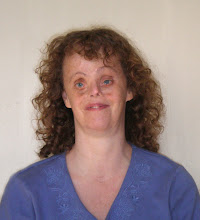
I used to consider my body to be a distinct and separate entity from myself, hideous and deformed whereas I was smart and shy. (This is known as making the body other.) Although intended to be comforting, being told "It's what's on the inside that matters" simply strengthened my perception of the physical form I inhabited as unsightly and deepened the chasm that detached me from it. There is no way to know for certain, but I suspect all the surgery provided further reasons to consider body as other. If nothing else, I could keep the physical experience and resulting pain at bay by allowing it to happen to something that was not me.
AS a coping strategy, dichotomizing myself into "me" and "that body" served the purpose of getting me through choppy waters. In college and afterward, I did the necessary work to first like then inhabit my own skin. Now my physical form is a natural extension of me and I can no more think of my body as another entity than I can separate my heart and soul. It's all one giant work in progress.
Today, when I encounter that which implies the body is other, I become somewhat annoyed. Unfortunately, this duality is everywhere. "He's an oreo" is used to denote a black person (outside) who behaves like a white person (inside). The expression "the mind is willing but the flesh weak" is used to remove us from the equation of blame for what are bodies cannot do. We say, "she is young at heart" or "he's five going on twenty-five."
All the examples I have given share one commonality: the impression engendered by the physical form is not in sync with the perception of the inhabiting spirit. I would have no objections to this if I could find adequate evidence to prove that it is equally likely to happen when the inside fails to live up to the outside. Of the examples I've given, only 'oreo' could be considered a negative assessment of the self. Sometimes people talk of somebody being a pretty package with nothing underneath. Mostly, though, splitting the two is reserved for times when the tangible fails to meet a subjective standard. Often society defines this standard by how it assesses a physical form. The external must be ugly, old, or otherwise fall short of the mark, then it is compared with the perception of the physical form such that a ugly body with a nice inhabitant becomes somebody who is "pretty on the inside."
When this segregation is a commonplace way of thinking, it becomes simple for an individual to consider their flesh as distinct from themselves – the body as other.. Once the physical form is a separate entity, it is easier to hate it, find it unsightly, or blame it for shortcomings.
As mentioned, I think this segregation of body and spirit is detrimental to human beings. Central to my objections is the standards used to judge the physical form. Who defines attractive? Who said old was a bad thing? Why do we feel a need to explicitly identify our bodies as the source of a shortcoming? It's all about societally-defined standards and I tend to dislike them on principle. No entity, whether person government, or 'society,' should dictate what I think or by extension the criteria by which I judge.
Take a moment and consider how you think about your own body. In your mind, are you one thing and it another? Is the dislike you may have of your physical form keeping that form separate from that which you perceive as yourself? Do you look in a mirror and know the reflection to not be a representation of yourself? Have you said something like, "The mind is willing but the flesh weak" instead of simply saying, "I wish I could, but I'm too tired"?
I believe, from long personal experience, that the nature of the relationship we have constructed between body and self directly impacts our body image. In a world where more than half the women hate their own bodies, I deem it high time we start consciously finding healthier ways to think about the body that carries us through this life. Until we shed it at death, it is the only one we have and liking it will make the journey more pleasurable.
Showing posts with label societal standards. Show all posts
Showing posts with label societal standards. Show all posts
Wednesday, April 14, 2010


Subscribe to:
Posts (Atom)